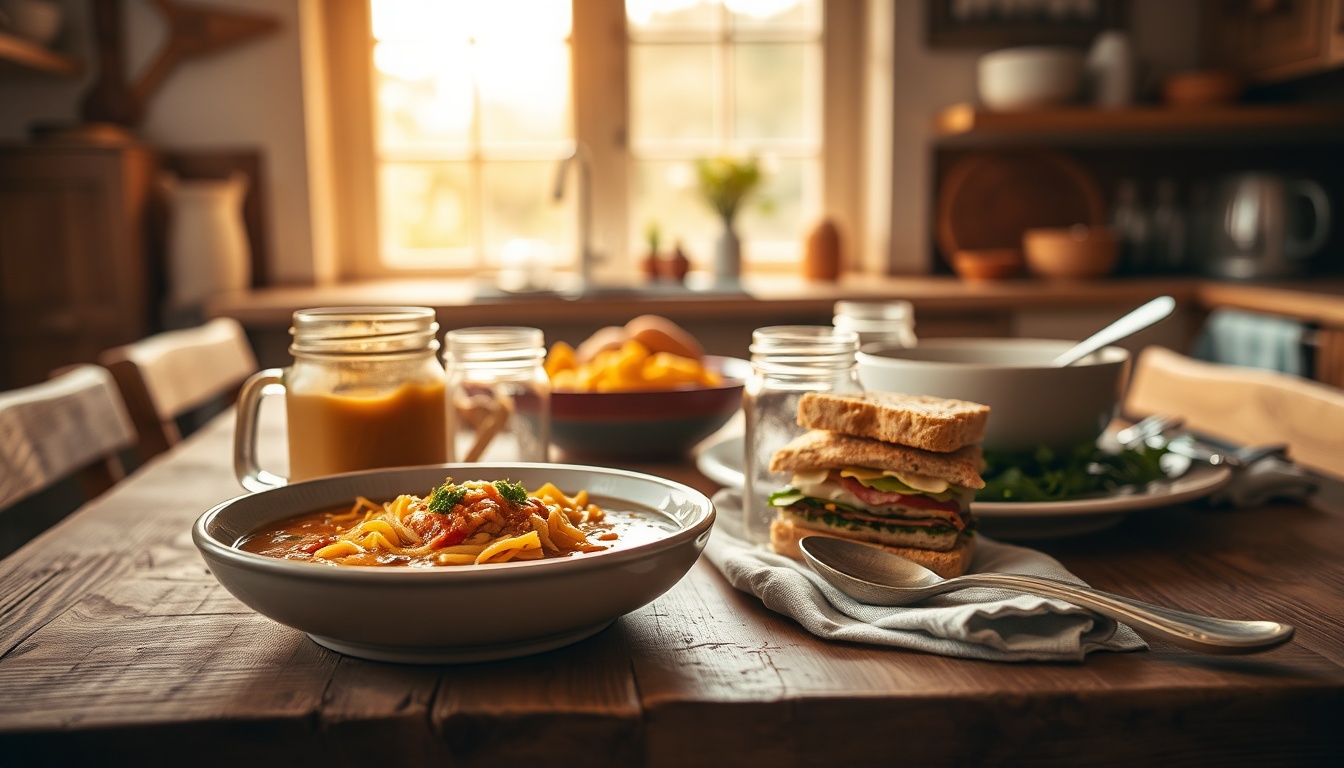
How we actually eat when money is tight. Five people, seven days, $50-75 a week. It’s not deprivation. It’s just knowing what works.
Tuesday morning at 10 AM, Jake’s two weeks into rotation and I’m standing in front of the fridge trying to make the math work. Two pounds of ground beef I bought on markdown. Chicken thighs that cost half what breasts do. Half an onion wrapped in foil. A corner of cheddar. The pantry has what it always has: rice, beans, pasta, flour. By Friday we might be eating eggs for dinner. By Sunday I’ll have figured it out again.
There used to be shame in this. I used to think a mother with a tight budget was failing at something. I’d watch food blogs full of farmers market hauls and fresh everything and think I was doing it wrong. But Wyatt grows out of jeans every season. Mason eats like food didn’t exist at breakfast. The bills don’t shift just because we’re careful with money. So I stopped trying to be someone else’s version of a good cook and learned to be very good at being our kind of cook.
The six recipes I’m sharing here are the ones the kids actually ask for. Not the ones that sound impressive. The ones that work twice a week without anyone getting tired of them. The ones that teach you which meals stretch into two, which ones freeze and come back better, which ones taste so good nobody’s thinking about the cost.
The Six Recipes That Actually Work
1. Mason’s One-Pot Chicken & Rice
Mason asked about this one at dinner, sometime when he was five: “Mom, why does everything taste so good when it’s all cooked together?” He was poking at the chicken with his fork like he was discovering something. The answer’s simple: one pot, one chance to build flavor. Nobody’s calling me while I’m juggling four pans. Duke isn’t whining because his bowl is empty. The kitchen doesn’t look like something exploded.
Chicken thighs are the secret. They’re cheaper than breasts. They don’t dry out. One pot. Rice. Broth. Whatever seasonings you have. Twenty-five minutes and you’ve got dinner. If you want even simpler, my brothy beans and rice bowl works the same way on the budget. I make this twice a week because someone always asks for it. It fits perfectly into my plan of easy weeknight dinners.
Why this works on money: One package of chicken thighs, rice, broth, maybe a carrot. About $8 total. It feeds five people with leftovers that become fried rice. That’s one dinner with a bonus lunch.
2. Taco Tuesday (Because It Works Every Time)
Wyatt asks if we’re doing tacos every Tuesday, like he doesn’t already know the answer. I do them anyway because there’s something about tacos that makes people happy. Maybe it’s that even Mason gets to feel like he’s building his own dinner instead of being fed.
I’m not buying seasoning packets. Cumin and chili powder and garlic powder I’ve owned for two years because they last. Ground beef. Onion. Some kidney beans to stretch the meat further. The kids are too busy assembling their own plates to notice they’re eating something economical. They just taste good food.
Why this works on money: Ground beef, beans, spices, tortillas. About $12. Everyone eats. Nobody asks for more.
3. Wyatt’s Sloppy Joes
Wyatt named this by clearing his plate first. Ground beef, ketchup, brown sugar, Worcestershire, onion. On a bun. That’s the whole recipe, but it’s the dinner where I don’t hear “Mom, I’m still hungry” two minutes after everyone’s finished.
This is the meal I make when the budget is really tight. When Jake’s been waiting for a job to start or we’ve had an unexpected expense. Sloppy joes don’t require fancy sides or multiple proteins. One batch makes six or seven sandwiches. The flavor is good enough that the kids clean their plates without noticing you made it thin.
Why this works on money: One pound of ground beef, ketchup, brown sugar. Maybe $4-5. It’s the meal I know will work when everything else feels impossible.
4. Sheet Pan Sausage & Vegetables
One pan. Sausage and whatever vegetables are still good in the fridge. Some oil, salt, pepper. Into the oven. Three minutes of active cooking. The oven does the work while I help Clara with her homework or watch Duke try to fit himself onto the couch.
Somehow it looks like you spent more time on it than you did. The sausage gets a little caramelized. The vegetables turn golden at the edges. Dinner looks intentional.
Why this works on money: Sausage and seasonal vegetables, somewhere between $10-12. One pan means one thing to wash, which is a different kind of budget—the kind where you have energy left to sit at the table.
5. Slow Cooker Chili (Four Dinners for $15)
This is the one that teaches you how to make money work for a week. I put this on in the morning—ground beef, kidney beans, pinto beans, tomatoes, onion, spices—and by the time the kids get home from school, the house smells like you’ve been working all day. You’ve been doing laundry. Answering emails. Refereeing Mason and Wyatt. The chili has been doing its job while you do yours.
Monday it’s chili in bowls. Tuesday it’s over rice. Wednesday maybe it’s nachos. My slow cooker meals all work like this—one day, four dinners. Jake actually asks for this when he’s home. Not like it’s expected. Like it’s something he looks forward to.
Why this works on money: About $12-14 in ingredients that become four real dinners. The longer it simmers, the better it tastes. That’s how you know it works.
6. Homemade Mac & Cheese (For Less Than Five Dollars)
I know it sounds indulgent. But this version—butter, flour, milk, cheese—is one of the cheapest dinners I make. A box of pasta is maybe $1. Butter, flour, milk, and cheese maybe another $3. That’s dinner for five people for less than five dollars.
Mason eats it like it’s the best thing he’s ever had. Pure, unapologetic joy. Clara eats her portion and seems genuinely satisfied. Wyatt eats like the breakfast didn’t happen. And here’s the thing: homemade mac and cheese tastes richer than the boxed kind. You’re not paying for packaging or a logo. You’re paying for basics, and somehow those basics become something more.
Why this works on money: Pasta, butter, flour, milk, cheese. Maybe $4-5 total. Cheap and filling and delicious don’t have to be different things.
How This Actually Works
Plan Around What’s On Sale
I don’t decide what’s for dinner and then shop. I look at what’s on sale—this week chicken thighs are $1.29 a pound, ground beef is marked down—and I build the week around that. It sounds backward, but that’s how you make $60 stretch into seven days. The store is telling you what to cook by what they’ve discounted. I’m just listening.
Make Your Own Instead of Buying the Mix
Taco seasoning packets are mostly salt and markup. I have basic spices that I’ve owned for two years because they last. A teaspoon of cumin and chili powder cost about eight cents. A packet costs a dollar. Your spice cabinet is your secret weapon. Stock it once and it pays for itself a hundred times over.
Stretch Meals Into Leftovers With Intention
One-pot chicken becomes fried rice the next day. Chili becomes nachos or goes over pasta. Sloppy joe meat goes into eggs the next morning. You’re using what you already made instead of cooking twice. That’s how you don’t spend twice as much.
Kids Don’t Care About Fancy
I thought my kids wanted restaurant-quality presentations and careful plating. They actually want food that tastes good and a mom who isn’t stressed while making it. A sloppy joe piled high on a soft roll doesn’t look like anything on Pinterest. Wyatt’s already cleaned his plate. Perfectionism costs money and energy. This way costs four dollars and yields a happy family.
Buy Bigger When You Can
On weeks when there’s breathing room in the budget, I’ll buy a bigger package of meat and freeze half in smaller portions. This costs the same per pound, but you’re setting yourself up for easier weeks coming. It’s not about having more money. It’s about making smart decisions with the money you have.
What I’ve Learned
Ten years of feeding this family on what we actually have taught me this: there’s no shame in a careful budget. There’s actually something honest about it. You pay attention. You get creative. You learn what your family actually needs instead of what the marketing says they want. Somewhere in the middle of making the fourth mac and cheese of the month or the second sloppy joe dinner, you stop feeling like you’re failing and start feeling like you’re winning.
Jake came home last week from two weeks on rotation. The first thing he did was look in the fridge, see the containers of chili, and smile. Not like it’s a burden. Like it’s something I do with love, using what we have, making sure nobody goes hungry.
That’s exactly right. That’s the whole thing.
Feeding a family on what you actually have isn’t about deprivation or clever tricks. It’s something I return to again and again with recipes and ideas on the recipes page. It’s about knowing which recipes do the work, which ones your family will ask for, and which ones let you sit at the kitchen table knowing that everyone’s fed and you still have money left for next week. These six are the ones that made that possible for us. Maybe they’ll do the same for you.
Sit down at the table. Eat something warm. That’s always been enough.
More From Our Kitchen
If you liked this, you might also enjoy: