Menu Planning Made Simple
Intro: Easter on a Real Budget
Jake makes good money as a pipeline welder, but we’re deliberate about it. That means Easter dinner is important—important *and* thoughtful about spending. I’ve learned that feeding my family well doesn’t require spending money we don’t have. Every year, I sit down with the calendar and the grocery ads about four weeks before Easter, and I ask the same question: How do I make Easter dinner feel special without the price tag to match?
The answer isn’t deprivation. It’s not cereal and ham in a can. It’s strategy.
Easter used to stress me out—that pressure to make something “Instagram worthy” on a budget that said no. Then Nana Ruth taught me something I didn’t expect from her: she didn’t care what anybody’s Instagram looked like. She cared about what was on the table and who was sitting around it. She planned meals like she was solving a puzzle, not like she was chasing a trend. “You plan ahead,” she’d say, “and you buy smart, and nobody knows the difference between expensive butter and regular butter once it hits the pan.”
She was right.
This guide is how I plan for Easter: what to buy, when to buy it, what to make ahead, where the real savings live, and how to feed my family of five (plus the occasional guest) beautifully for $50–75 total. Not with shortcuts that taste like shortcuts. Not with sad little sides. Just real Easter dinner that matters, planned so the budget doesn’t scream every time I open my wallet.
The secret isn’t magic. It’s just the way Nana Ruth always said: show up early, pay attention to sales, and never waste what you’ve already bought.
Complete Easter Menu (Suggested)
Here’s what we serve on Easter. Not fancy. Just ours.
Breakfast (8 AM): Carrot cake pancakes, fresh fruit (strawberries or oranges depending on what’s on sale), strong coffee for the adults, milk for the kids. The kitchen smells like cinnamon and spring by 7 AM.
Egg Hunt: Between breakfast and lunch, we’re outside in the yard—grass still cold and damp, Duke following Mason, hoping for crumbs that never come. This doesn’t cost anything except the eggs we dye ourselves and the small toys or chocolate eggs we’ve picked up on sale weeks before.
Light Brunch (around 10 AM): Clara’s spring herb deviled eggs, fresh asparagus soup (because April asparagus tastes like a miracle and costs almost nothing). Sometimes we add fresh fruit salad or a simple side salad.
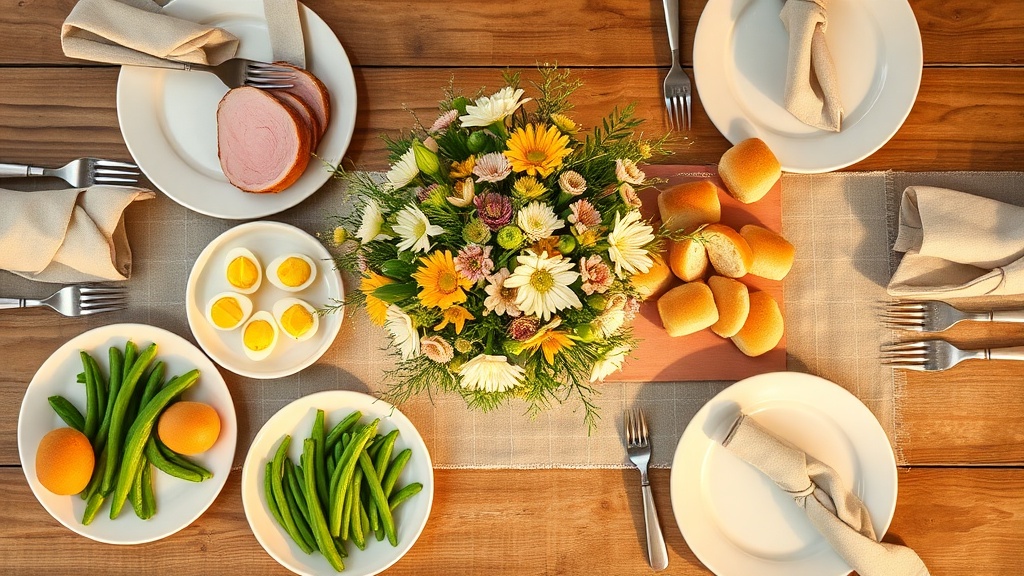
Dinner (around 5 PM): This is where Easter lives. Jake’s bourbon maple glazed ham (we buy it on sale three weeks before—$1.50–2/lb on markdown, never full price). Nana Ruth’s honey butter dinner rolls (dough freezes, bakes morning-of and fills the house with warmth). Clara’s deviled eggs again (they’re that good). A simple green salad. Maybe roasted asparagus or buttered peas. Bread pudding made from leftover hot cross buns for dessert—something warm, slightly custardy, the color of Easter morning.
Rough Cost Breakdown for Family of Five:
- Ham (8–10 lb on sale): $15–20
- Eggs (three dozen): $6–8
- Butter, cream cheese, milk: $8–10
- Flour, sugar, baking staples (pantry): $2–3
- Asparagus, fresh produce: $6–8
- Hot cross buns (bakery section, day-old): $2–3
- Rolls ingredients (butter, flour, honey—pantry): $2–3
- Bourbon for glaze (you likely have this): $0
- Pancake ingredients (pantry): $1–2
Total: $50–75 depending on what you already have and what goes on sale in your area.
Why these recipes? Because each one does something the others don’t. The ham is the centerpiece—it’s what people remember. The rolls make people feel cared for (fresh bread always does). The deviled eggs let Clara be the star (she loves that precision). The soup is bright and seasonal—it says spring in a bowl. The bread pudding is the sweet ending, and it uses up what would otherwise be wasted.
Nothing here is complicated. Nothing requires special ingredients or technique you don’t already know. Everything tastes like Easter because it *is* Easter—the gathering matters more than the show.
3-Week Timeline (Shopping + Prep)
Easter comes on April 5 this year, which means I’m planning and shopping from mid-March on. Here’s exactly how I work backward from dinner day.
Three Weeks Before Easter (March 15)
This is planning week. I pull out the calendar, check the grocery ads for my local stores (Kroger usually, sometimes Walmart depending on who’s running the sale). I’m looking for:
- Ham sales (watch the ads—Easter ham goes on markdown about 3 weeks out)
- Eggs (buy now; they last until mid-April)
- Butter (if it dips under $3.50/lb, I stock up; freeze it if I have room)
- Cream cheese (watch for sales, buy extra)
I also check what’s in my pantry: flour, sugar, baking powder, vanilla, spices. No point buying what I have. I make a master shopping list across three weeks—it’s not one big shop. It’s three strategic shops.
Two Weeks Before Easter (March 22)
This is shopping week #1 (major shop). I hit the stores with my list:
- Protein: Ham (locked in at sale price, bring it home, refrigerate immediately)
- Eggs: Multiple dozen (they’re cheapest per egg this far out)
- Dairy: Butter (stock up), milk, cream cheese
- Pantry: Flour, sugar, baking staples (anything that lasts 2+ weeks)
I come home and organize everything: ham in the back of the fridge, eggs in the door, butter in the freezer compartment if space allows. This shop takes about $35–40.
One Week Before Easter (March 29)
Wednesday/Thursday: Shopping week #2 (fresh produce and bread).
- Fresh asparagus (buy 3–4 days before use; it wilts fast)
- Fresh herbs (dill, chives, parsley for deviled eggs and soup)
- Lemons, fresh fruit for breakfast
- Hot cross buns from the bakery section (they’re cheaper if you buy day-old)
- A simple salad green
This shop is usually $15–20. Fresh produce prices are better closer to the holiday because stores are stocking for Easter shoppers.
Friday/Saturday: Prep week begins.
- Bake the bread pudding (yes, bake it 2 days early—it actually tastes better sitting overnight)
- Prep the roll dough; freeze it in portions so it’s ready to thaw and bake Easter morning
- Hard boil extra eggs and refrigerate (if making deviled eggs the day before)
- Wash and chop salad greens; store in paper towels in a container
Easter Morning (April 5) — The Timeline
5:30 AM: I’m up. Coffee. The furnace takes its time in April, but by the time the butter hits the pan, the whole kitchen smells like we’re about to do something that matters.
6:00 AM: Pancake batter (takes 10 minutes). Set it aside. Get the carrot grater ready.
6:30 AM: Start the ham (if it’s frozen, it needs to thaw in the fridge overnight—plan for this). Low heat, covered. It’ll bake for about 3 hours at 325°F (mark it on the calendar so you don’t forget).
7:00 AM: Make the soup (it’s fast—15 minutes of chopping, 20 minutes of simmering). Set it aside to reheat at dinner.
7:30 AM: Kids wake up. Pancakes are ready to cook. Coffee is hot.
8:00–9:00 AM: Breakfast—pancakes, fruit, coffee, everyone gathered.
9:00–10:30 AM: Egg hunt while ham bakes.
10:30 AM: Light brunch if hungry (eggs, soup, fruit).
11:00 AM–3:00 PM: The ham finishes baking. Make the glaze (5 minutes). Brush it on. Final bake (15 minutes). Rolls go in as ham comes out (25–30 minutes for fresh rolls, slightly less for thawed dough).
4:30 PM: Set the table. Warm the soup. Final touches.
5:00 PM: Dinner. Everything hot. Everything ready.
This isn’t complicated. It’s just scheduled so you’re not frantic at 6 PM.
Shopping Strategy: When to Buy What
The real savings live in timing. That’s not a secret grocery stores want you to know.
Eggs: Buy them NOW (3–4 weeks before Easter). Eggs are cheapest year-round, around $2–3 a dozen if you’re not fancy. They last until mid-April, so buy extra. You’ll use them for deviled eggs, in baking, maybe a day-after quiche. Bulk buy. No regrets.
Ham: This is where the biggest savings live. Watch your grocery store ads starting 4 weeks before Easter. Around week 3, ham goes on sale—usually $1.50–2/lb on the bone, sometimes even cheaper if you’re patient. The markup on pre-sliced ham is insane: $6–8/lb for the same meat. Buy a whole ham, bone-in or bone-out (bone-in is cheaper, and you can make broth). Pay $15–20 for an 8–10 lb ham instead of $40–60 for pre-sliced. The difference is huge.
Butter: If it goes under $3.50/lb, buy extra and freeze it. Baking requires butter. Easter baking especially. Stock up when it’s on sale. Freeze it in the coldest part of your freezer and thaw overnight before using.
Cream Cheese: Same rule. Watch for sales. Buy 2–3 packages when it’s marked down. Refrigerate immediately. You’ll use it for deviled egg filling and you might need extra.
Store Brands vs. Name Brands: Grocery store butter tastes the same. Store brand cream cheese tastes the same. Store brand eggs are the same egg. The packaging is different; the contents are identical. Save $3–5 per item by going store brand. Over a whole menu, that’s $15–20 in your pocket.
Whole vs. Pre-Cut: A whole asparagus spear is $2–3/lb. Pre-cut asparagus is $5–6/lb and starts wilting immediately. Buy whole, spend 5 minutes chopping, and save money. Same with fresh herbs—buy a bunch of chives for $1, not a tiny pre-cut container for $3.
Seasonal Produce: Asparagus in April is cheap. In December it’s $8/lb. Spring onions in April are $1.50/lb. In winter they’re $4+. The whole point of eating seasonally is that it’s cheaper *and* it tastes better. Easter in April means asparagus season. Lean into it.
The Combo Play: Use the ham twice. Deviled eggs at dinner. The next day? Ham and asparagus quiche (leftover ham, leftover asparagus, eggs you already bought). No waste. The same ingredient feeds you two ways.
Where to Shop: Kroger, Walmart, occasionally Aldi if you have one nearby. Download the app, clip digital coupons, watch the ads. Stores want your Easter business. Use that to your advantage.
Make-Ahead Plan: What Freezes, What Preps
The secret to Easter morning not being chaos is doing as much as possible the days before. Here’s what actually freezes well and what just preps ahead.
What You Can Freeze (Do This 2+ Weeks Ahead):
Rolls (Dough): This is the best hack. Make your roll dough from Nana Ruth’s recipe 2–3 weeks ahead. Divide into portions, wrap in plastic wrap and foil, freeze. Easter morning, thaw overnight in the fridge, let them rise for 30–45 minutes, and bake. Fresh warm rolls without the 2-hour dough rise on Easter morning. This saves you *hours*.
Bread Pudding (Completely Baked): Bake the bread pudding 2–3 days before Easter. It tastes *better* sitting overnight. The custard sets, the flavors deepen, and you just reheat it gently before serving. Wrap cooled in foil, refrigerate. Reheat covered at 300°F for 15 minutes before serving.
Soup (Completely): Make the asparagus soup entirely 2–3 days ahead. Cool completely. Refrigerate in an airtight container. Reheat gently on the stovetop 20 minutes before serving. Soup actually improves sitting overnight—flavors marry.
What You Can Prep (1–2 Days Ahead):
Deviled Eggs (Completely): Hard boil eggs the day before. Make the filling the morning-of or the day before (filling lasts 2 days refrigerated). Pipe or spoon filling into halves 2 hours before serving. Don’t fill too early or they get watery.
Salad Greens: Wash and dry 1–2 days ahead. Store in paper towels in a sealed container in the crisper drawer. They’ll stay fresh for 48 hours. Don’t dress the salad until serving or it gets soggy.
Fresh Fruit: Cut and store in containers 1–2 days ahead. Citrus holds longer than berries. Berries are best cut the morning-of.
What You CANNOT Freeze (Do Day-Of):
Ham: Never freeze a raw ham past the sell-by date; it won’t improve. Buy it 3–4 days before, keep refrigerated, cook it. You can freeze *leftovers* after cooking.
Pancakes: Make the batter the night before (it sits fine), but cook the pancakes Easter morning. They’re best hot. You can make them a few at a time and keep them warm in a low oven (200°F) while you finish the batch.
Carrot Cake Pancakes Specifically: The shredded carrot needs to go in fresh or it gets watery. Add it right before cooking.
Fresh Herbs: Add these to deviled eggs and soup right before serving. If you prep them too early, they wilt and brown.
Budget Hacks: Where the Savings Live
Real savings aren’t about eating less. They’re about being smarter.
Buy Proteins on Sale, Freeze Extras: Easter ham goes on sale before Easter. Buy it and freeze it? No. It’s already thawed and ready to cook. But buy extra eggs? Absolutely. Extra butter? Yes. These freeze perfectly and last until next month.
Whole Foods Cost Less Per Serving: A whole ham is cheaper per pound than sliced. Whole eggs (buying by the carton) cost less per egg than pre-prepared. A head of lettuce costs less per ounce than bagged salad. Spend 10 minutes prepping and save $10 on the week’s budget.
Pantry Staples Are Your Friends: Do you have flour, sugar, baking powder, vanilla, cinnamon, nutmeg? Congratulations—you already own most of what you need to make carrot cake pancakes, bread pudding, and rolls. Don’t buy pre-made versions of things you can make from ingredients you have.
Buy from the Scratch-and-Dent Bread Section: Hot cross buns and artisanal breads marked down 30–50% because they’re slightly older. You’re baking them into bread pudding anyway. The age doesn’t matter. The savings do.
Skip the Pre-Cut Everything: Asparagus spears vs. asparagus tips. Fresh herbs in bulk vs. pre-cut. You’ll spend $5 less and eat better because you’re using fresher product.
Shop Sales Instead of Menus: Don’t plan your Easter menu first. Look at what’s on sale first. Ham is on sale? Make the ham-focused menu. Asparagus is $2/lb? Buy asparagus-heavy recipes. Trend your menu to sales, not the reverse.
Use Leftovers Twice: Ham appears at dinner AND in the next day’s quiche. Asparagus is in soup AND roasted as a side. Every leftover gets a second life. No waste. No “sad leftovers”—intentional planned cooking.
Store Brands: Seriously. They’re the same product in different packaging. Your family won’t know. Your budget will.
Day-Of Timeline: 5 AM to Table
The morning-of schedule is what prevents me from losing my mind. Here’s how I actually pace it.
5:30 AM: I’m up before anyone. Coffee in hand. The house is still dark. This is my moment—the quiet before the day becomes ours. I pull out the ham to start coming to room temperature (it’ll go in the oven in 30 minutes).
6:00 AM: I make the carrot cake pancake batter. It takes 10 minutes. Combine dry ingredients in one bowl, wet in another, fold together gently. Leave it. It can sit up to an hour and still be perfect.
6:15 AM: Get the ham ready. Pat it dry. Score the top if you want (adds nice presentation, takes 2 minutes). Place skin-side up in a baking pan with about 1/2 cup water. Into the oven at 325°F. Set the timer for 3 hours.
6:30 AM: Start the asparagus soup (if not already made). Chop everything, sauté the shallots in butter for 5 minutes, add asparagus and broth, simmer 20 minutes, blend smooth, stir in cream, taste, adjust seasoning. Takes 35 minutes total. Set aside to reheat at dinner.
7:00 AM: Kids wake up (or I wake them). Everyone washes hands. I start cooking pancakes on the griddle. Wyatt eats three. Clara eats two. Mason eats one, then wants seconds. Jake (if home) eats four. Duke waits for syrup drips.
8:00–9:00 AM: We gather and eat. Nobody’s rushed. This is the moment where Easter morning actually starts—together at the table, full bellies, the day stretching ahead.
9:00–10:30 AM: Egg hunt while ham braises. I check it once, maybe twice (add water if needed).
10:30 AM: Light snack—deviled eggs, maybe a bowl of soup, fruit. I’m not full; I’m just tasting.
12:30 PM: Rolls come out of the freezer to thaw and proof (30–45 minutes at room temperature).
3:00 PM: Ham comes out of the oven (3 hours cooking). Temperature should be 140°F internally. Let it rest 15 minutes. Make the bourbon maple glaze (5 minutes: combine glaze ingredients, brush on ham). Back in the oven 15 minutes at 425°F to caramelize.
3:30 PM: Rolls go in the oven (300°F for 25–30 minutes if thawed).
4:00 PM: Bread pudding comes out of the fridge, goes into a 300°F oven covered with foil for 15 minutes to warm gently.
4:30 PM: Set the table. Warm the soup gently on the stovetop. Plate the salad. Put asparagus in a serving dish.
5:00 PM: Ham comes out of the oven. Rolls come out golden. Soup is warm. Everything is hot. Everyone is gathered.
This pacing means I’m never frantic. There’s a rhythm. Time to breathe between tasks.
Feeding Guests Affordably
Some years, we’re not just five. Sometimes Jake’s brother visits from Michigan (usually calling late with “Can I come for Easter?”). Sometimes a neighbor joins because they don’t have family in town. Sometimes Clara invites a friend. Here’s how I stretch without the stretch showing.
The Salad Strategy: I learned this from Nana Ruth. If you’re adding 2–3 people, add a salad. Iceberg lettuce is cheap (under $1.50 a head). Add some fresh vegetables—tomato, cucumber, cheap fresh herbs. Suddenly you’ve added nutritious volume without busting the budget. A full salad takes half the plate space of ham and sides. The table looks fuller. Nobody’s hungrier. The budget doesn’t scream.
Make Extra Rolls: Rolls freeze dough brilliantly. The plan was 24 rolls? Make 36. Freeze the extras raw. If guests come, thaw a few more. Costs maybe $1–2 more and feels generous. When Jake’s brother comes, he eats rolls like they’re the only food available. Four or five. That’s why I always make extra.
Simple Sides over Complex Ones: Don’t add casseroles or complicated dishes. Add buttered peas (frozen peas are cheap), roasted asparagus (if it’s in season), boiled potatoes with butter. These are affordable to scale. Mason once asked “Why don’t we make everything complicated?” and I said “Because warm and simple feeds people just fine.” He understood that.
Stretch the Meat with Other Proteins: If you’re serving more people, add more deviled eggs (you already bought eggs). Clara can make extra—she loves the precision work. Add a simple bean salad (canned beans, vinaigrette, fresh herbs). Add cheese. These are cheaper per serving than scaling up the ham.
Beverages: Coffee (endless), milk, water, sweet tea if you’re in the South. Skip the wine or wine coolers unless you already have them. Drinks don’t have to be fancy. They just have to be warm or cold as needed.
Dessert Strategy: You’re already making bread pudding. Make extra bread pudding. It’s cheaper than adding a second dessert, and everybody loves it. If you want variety, add fresh fruit or a simple cobbler (cheap, feeds a crowd, tastes like care).
The Rule: If you’re adding 2 people (10 total), add maybe $15–20 to your budget, not $50. You’re not creating a separate fancy menu for guests. You’re just making more of what you’re already doing. That’s hospitality. That’s just right.
Closing: Why This Matters
Spending wisely on Easter doesn’t mean we’re skipping celebration. It means we’re intentional. It means I know where every dollar goes and what it buys us.
This budget isn’t about deprivation. It’s about strategy. The table is full. The food is good. We’re together. That’s what matters.
Nana Ruth never felt poor about money because she was never careless with it. She didn’t apologize for a simple menu. She was proud of it. She’d say, “The best meals aren’t the most expensive ones. They’re the ones made with attention.” I think about that every Easter.
When Jake gets home and sees what we’ve done—a table that cost $50 but looks intentional, tastes warm, feeds five people beautifully—he nods. Not because it’s fancy. But because it’s ours. Because it says: “We know what matters. We planned for it. We showed up.”
That’s a good one. That’s always a good one.
Download the full 3-week Easter planning PDF: shopping list, timeline, make-ahead checklist, and day-of schedule. Join our community of families planning Easter together.
{
“@context”: “https://schema.org”,
“@type”: “HowTo”,
“name”: “Planning Your Easter Menu on a Budget”,
“description”: “Create an elegant Easter feast for $50-75 by shopping strategically, planning ahead, and using a proven 3-week timeline.”,
“totalTime”: “PT45M”,
“step”: [
{
“@type”: “HowToStep”,
“name”: “Plan Your Complete Menu (3 weeks before)”,
“text”: “Decide on your Easter menu. The suggested menu includes: Carrot cake pancakes for breakfast, deviled eggs and asparagus soup for light brunch, bourbon maple glazed ham with honey butter rolls for dinner, plus bread pudding for dessert. This approach creates a complete celebration without unnecessary complexity.”,
“position”: 1
},
{
“@type”: “HowToStep”,
“name”: “Check Your Pantry”,
“text”: “Review what you already have: flour, sugar, baking powder, vanilla, cinnamon, spices, butter (if you can freeze extra). You likely already own most ingredients for pancakes, bread, and custard-based desserts. Only buy what’s actually missing.”,
“position”: 2
},
{
“@type”: “HowToStep”,
“name”: “Watch for Sales (3-4 weeks out)”,
“text”: “Monitor grocery store ads starting 4 weeks before Easter. Ham goes on sale to $1.50-2/lb (versus $6-8/lb pre-sliced). Eggs are cheapest year-round at $2-3/dozen. Butter and cream cheese drop in price before holidays. Buy these items when on sale and freeze what you can.”,
“position”: 3
},
{
“@type”: “HowToStep”,
“name”: “Make Your First Major Shop (2 weeks before)”,
“text”: “Buy protein (ham on sale), multiple dozen eggs, dairy (butter, milk, cream cheese), and pantry staples (flour, sugar, baking essentials) that last 2+ weeks. Organize everything properly: ham in the back of the fridge, eggs in the door, butter in the freezer if space allows. Budget: $35-40.”,
“position”: 4
},
{
“@type”: “HowToStep”,
“name”: “Shop for Fresh Produce (1 week before)”,
“text”: “Buy asparagus (fresh, not pre-cut), fresh herbs (dill, chives, parsley), lemons, fresh fruit for breakfast, day-old hot cross buns, and salad greens. These are cheaper closer to the holiday. Budget: $15-20.”,
“position”: 5
},
{
“@type”: “HowToStep”,
“name”: “Begin Prep Work (Friday/Saturday before Easter)”,
“text”: “Bake the bread pudding (it tastes better sitting overnight). Make roll dough and freeze in portions (thaw Easter morning for fresh warm rolls). Hard-boil extra eggs if making deviled eggs ahead. Wash and chop salad greens, store in paper towels in a sealed container.”,
“position”: 6
},
{
“@type”: “HowToStep”,
“name”: “Execute Easter Morning Timeline”,
“text”: “5:30 AM: Start ham in oven (3 hours at 325°F). 6:00 AM: Make pancake batter. 6:30 AM: Start asparagus soup (35 minutes). 7:00-9:00 AM: Cook pancakes, gather for breakfast. 9:00-10:30 AM: Egg hunt while ham bakes. 12:30 PM: Remove rolls from freezer. 3:00 PM: Ham finished, make glaze, final bake. 3:30 PM: Rolls bake. 4:30 PM: Warm bread pudding and soup. 5:00 PM: Everything ready, gather at the table.”,
“position”: 7
},
{
“@type”: “HowToStep”,
“name”: “Know Your Budget Hacks”,
“text”: “Use whole foods instead of pre-cut (save $5-10). Buy store brands (same quality, different packaging). Use seasonal produce. Stretch ham twice (dinner and next-day quiche). Make more rolls than needed and freeze extras for guests. The real savings come from timing and strategy, not deprivation.”,
“position”: 8
}
]
}
From My Easter Kitchen:
Want My Easter Menu Printable?
I put together a complete Easter guide — with timelines, checklists, and my personal notes on what can be prepped ahead. It’s the same one I’m using at home. Drop your email and I’ll send it right over — free, of course.
— check back here!
More From Our Kitchen
If you liked this, you might also enjoy: