Easter Cooking with Your Kids: Real Recipes That Turn Chaos Into Teaching Moments
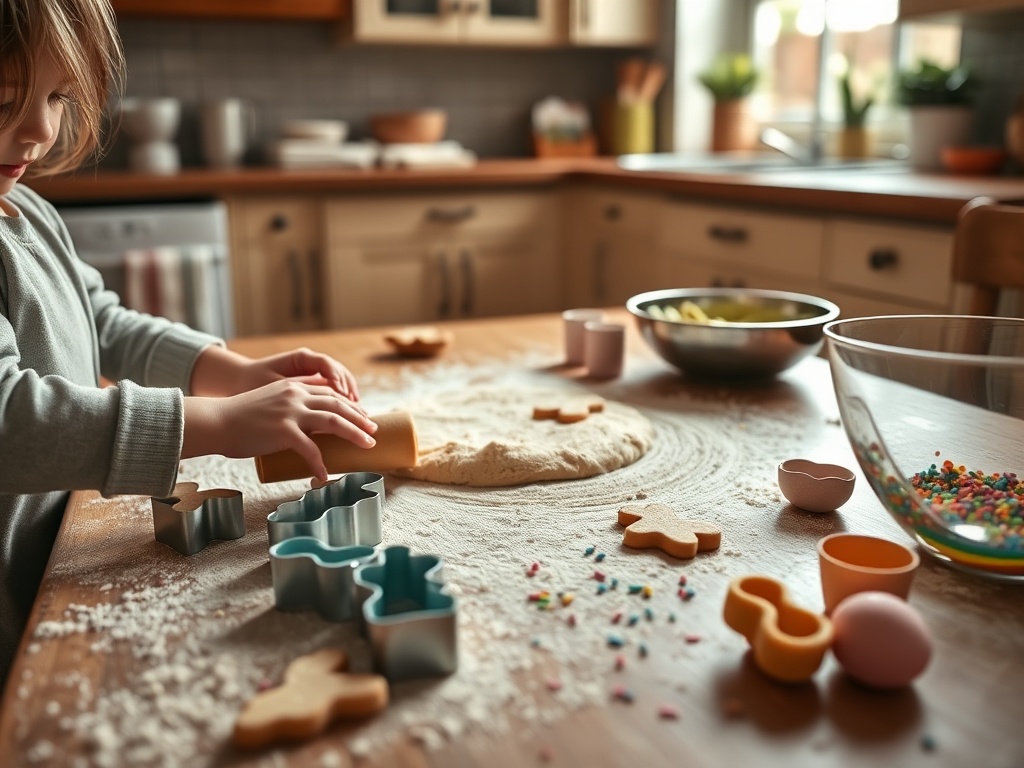
Easter morning in our kitchen looks like controlled chaos. There’s flour on the dog. Mason’s hands are sticky from the snack mix he “helped” make. Clara’s concentration face is on—the one she gets when she’s trying to do something right. Wyatt’s already taste-tested everything twice. And somewhere in the middle of it all, I’m realizing that this is exactly why I do this.
I cook with my kids on Easter not because it makes things easier or faster or cleaner. It does none of those things. I do it because there’s something that happens in the kitchen when your hands are working next to theirs—something that can’t be bought, bottled, or downloaded. They learn that food doesn’t just appear. They learn that mistakes are fixable. They learn that when you make something with your own hands and feed it to people you love, it becomes more than food. It becomes a gift.
Why This Matters More Than You’d Think
The kitchen is the best classroom I’ve ever taught in.
When Nana Ruth had me stand on a stool beside her wood stove, she wasn’t trying to make me a chef. She was teaching me something slower and deeper: that following steps in order matters. That ingredients transform when treated right. That working alongside someone you love is how traditions stay alive. When I realized those Saturday mornings with her were disappearing, I understood that her recipes weren’t the point. Her presence was the point. The way she showed me how to do things. The way my hands learned what hers knew—her hands that knew which bread dough had risen just enough, which eggs were ready, which moment meant something warm was about to be real.
That’s what I’m trying to build with my three, especially on Easter.
Easter is already a teaching moment—if you let it be. It’s about renewal. Resurrection. New life. And food is the tangible way we make that real for kids. When Mason (seven, all energy and questions) kneads dough and feels it come alive under his hands, I’m not just teaching him how to bake. I’m showing him cause and effect. Work has results. Heat changes things. Patience yields something good. When the roll comes out of the oven golden and warm, he learns what it means to make something warm from nothing but flour and time. When Clara (nine, earnest, precise) decorates Clara’s Spring Herb Deviled Eggs and takes pride in her own version being “different special,” she’s learning that excellence isn’t about perfection. It’s about care. When Wyatt (ten, the ringleader) manages a recipe with multiple steps and actually thinks through the order, he’s building real problem-solving skills, the kind of hands that know what comes next.
But more than any of that: they’re making memories. The kind that stick.
My kitchen won’t be Pinterest-perfect on Easter morning. There will be flour in the crevices of the counter. The measuring cups will be in three different places. Duke will smell like snack mix. And here’s what matters: the kids will sit down to eat something they made, with their hands, and their pride will taste better than any ingredient I could have added.
The Age-Based Reality: What Each Kid Can Actually Do
This is where the honesty comes in. If you try to have a two-year-old make honey butter rolls, you’re not building tradition. You’re building frustration. So let me tell you what works in our house, by age, so you can adjust for yours.
Ages 5-7 (Maggie’s Mason)
Mason is the perfect age for tasks that require enthusiasm more than precision. He can stir. He can sprinkle. He can measure with help (I’ll guide his hands to get the right amount in the measuring cup, then he dumps it in). He can arrange things—cookies on a sheet, toppings on cupcakes, decorations on eggs. The point is giving him tasks where mess is part of the job description.
His real learning happens in the contributing. He’s not thinking “I’m developing fine motor skills.” He’s thinking “I made this and everyone’s going to eat it.” That pride, that sense of “I did that,” that’s the classroom.
Safe tasks for this age: stirring, measuring with supervision, sprinkling toppings, arranging, pouring (water, not hot liquids), cracking eggs into a bowl (shells will end up in there, but we fish them out), pressing buttons on appliances (with hands held if needed).
What he learns: following steps, contributing to family, pride in the result.
Ages 8-9 (Maggie’s Clara)
Clara wants to do things right, which is both a gift and something I have to be patient with. She reads the recipe now. She wants to measure accurately. She can crack eggs—actually crack them, shells separate—and she’ll ask questions if something seems wrong: “Wait, the recipe says two eggs but I only have one, is that okay?”
This is the age where real responsibility starts. I can leave her measuring the dry ingredients while I handle the heat-involved parts. She can help with more complex assembly. She’s starting to understand cause and effect in a more sophisticated way.
Safe tasks for this age: reading recipes, measuring independently (with a quick verification from me), cracking eggs, mixing wet ingredients, following written instructions with minimal guidance, simple decoration and assembly, light stirring (not at the stove). She can help with things that need precision—arranging things on a plate, frosting decorations, anything that benefits from care and attention.
What she learns: following written instructions, precision, responsibility, problem-solving (“that’s too much salt, what do we do?”), the confidence that comes from being trusted with real tasks.
Ages 10+ (Maggie’s Wyatt)
Wyatt can actually cook now. He can manage multiple steps. He can watch timing. I still supervise anything involving significant heat, but he understands the “why”—why we don’t open the oven when something’s rising, why the rolls need to rest, why we test the pancake with a finger before flipping.
He’s starting to think like a cook, not just a helper. He notices flavors. He makes suggestions. He remembers what worked last time.
Safe tasks for this age: actual cooking under supervision, kneading, managing timing, tasting and adjusting seasoning, multi-step recipes, managing heat-dependent tasks (toasting, pan-cooking with you there), decoration and plating, cleanup (which is a real task now).
What he learns: time management, sequential thinking, attention to detail, how to problem-solve when something doesn’t work, real kitchen confidence.
Four Easter Recipes Where the Cooking Is Part of the Celebration
These aren’t recipes for kids to make alone. They’re recipes where kids participate meaningfully, and the mess and chaos are built into the plan.
Recipe #1: Easter Bunny Snack Mix (Start Here)
This is the gentlest entry point. It’s almost impossible to mess up, which is perfect for easing into the day. (See the full standalone recipe for variations and storage tips.)
The Setup: No oven until the very end. Everyone gets to handle the ingredients. Instant gratification.
What You Make:
– 3 cups popcorn, popped (or cereal if you prefer)
– 2 cups cheese crackers, broken into bite-sized pieces
– 1 cup coconut flakes
– 1 cup sliced almonds (or whatever nuts/seeds your family likes)
– 1/2 cup dried cranberries or raisins
– 3 tablespoons butter, melted
– 2 tablespoons honey
– 1 teaspoon vanilla
– 1 teaspoon cinnamon
– Pinch of salt
By Age:
– Mason (7-8): Measures the dry ingredients into a big bowl with your help. Sprinkles the toppings. Stirs everything after you add the butter mixture. Licks the spoon (because that’s the real reward).
– Clara (9-10): Can actually measure independently now. Mixes the butter, honey, and vanilla together, learning that different ingredients blend. Pours it over the dry mix while stirring.
– Wyatt (11-12): Manages the oven spreading (on parchment, at 325°F, for 12 minutes, stirring halfway). Tastes it at the end and decides if it needs more cinnamon.
The Teaching: Following steps in order. Ingredients combining into something new. Heat transforming texture. The cause and effect is immediate—you add butter and honey, it gets sticky and delicious.
The Chaos: There will be coconut flake dust. Crackers will crumble. Nuts will end up on the floor. That’s the job. I usually set out a sheet to contain the worst of it, but I don’t stress it.
Why It Works: Everyone gets a clear role. No one can really break it. Everyone tastes the result and feels proud. It’s just right as a warm-up to bigger recipes — confidence-building without stakes.
Recipe #2: Carrot Cake Pancakes (Real Involvement)
This is where we’re actually cooking. Flipping. Watching something transform on the griddle. (Full recipe with texture notes and syrup pairings here.)
The Setup: I set up mise en place (fancy term for “everything measured and ready”), which teaches organization. The kids see why this matters—if Mason grabs the egg when you’re not ready, it goes everywhere.
What You Make:
– 1 cup all-purpose flour
– 1 tablespoon sugar
– 2 teaspoons baking powder
– 1 teaspoon cinnamon
– 1/2 teaspoon salt
– 3/4 cup milk
– 2 eggs
– 2 tablespoons melted butter
– 1 cup grated carrots
– 1/4 cup crushed pineapple (optional but good)
– 1/2 cup chopped walnuts (optional)
By Age:
– Mason: Measures the dry ingredients into a bowl (with guidance). Watches and helps stir. Tests if a pancake is “ready” by putting a finger on it (I show him the steam tells us when it’s ready to flip).
– Clara: Cracks the eggs into a small bowl. Measures the milk. Stirs the wet ingredients. Learns that you need to combine wet and dry separately, then marry them.
– Wyatt: Manages the griddle temperature. Watches for the moment to flip (when bubbles form and edges look dry). Actually flips some of them. Takes real responsibility for the cooking part.
The Teaching: How different ingredients have different jobs. How heat turns batter into something else. Timing. Watching for signs (the bubbles, the set edges). The moment when the pancake transforms.
The Chaos: Pancakes will be weird shapes. Some will be too brown, some will be pale. That’s not a failure—that’s the learning. “Look, that one cooked too fast because the heat was higher. Let’s turn it down.” “That one didn’t cook long enough, it’s still raw in the middle. Next time we’ll give it more time.”
Why It Works: It’s a real Easter breakfast. Kids actually cook something that feeds the family. There’s heat involved, so they’re learning heat management. And the thing is delicious—carrot cake for breakfast, basically.
Recipe #3: Deviled Eggs (Precision + Decoration)
Clara loves this recipe. It’s precise enough to satisfy her need-to-do-things-right, but there’s room for creativity at the end. (See the full deviled eggs recipe for flavor variations and make-ahead tips.)
The Setup: I boil the eggs the night before. This is an important lesson: real cooking involves prep work done separately. You can’t do everything at once. (This is also true of Easter dinner in general—which is why this recipe is in the “managing chaos” section of a bigger meal.)
What You Make:
– 6 hard-boiled eggs
– 3 tablespoons mayonnaise
– 1 teaspoon Dijon mustard
– 1/2 teaspoon apple cider vinegar
– 1/4 teaspoon salt
– Paprika, fresh herbs, crackled pepper for topping
By Age:
– Mason: Helps scoop out the yolks (I’ll do the hard part of cracking and halving). Gets to taste-test the filling. Arranges the finished eggs on a plate. Sprinkles the paprika—he loves this part, gets to be artistic.
– Clara: Cracks and halves the eggs carefully (she’s good at this). Mixes the mayo, mustard, vinegar, salt—which teaches seasoning balance. Piping the filling into the egg white halves (I got her a small piping bag last year, the thing that changes everything). She makes each one slightly different and calls them “her versions.”
– Wyatt: Handles the mixing and flavor adjustments. Tastes and says whether it needs more salt, more mustard. This teaches tasting as part of cooking. Decides what the final plating looks like.
The Teaching: How flavors combine. How taste-testing is a real cooking skill. Precision (getting the filling even). That there’s no one “right” way to decorate an egg—each person’s version is special.
The Chaos Potential: Egg yolks will get everywhere. Shells will end up in the filling (we fish them out). Someone will get mayo on their shirt. This is fine. Failures teach: “Okay, that one didn’t pipe right, but look—it still tastes good. That’s what matters.”
Why It Works: It looks fancy, which makes kids feel proud. It’s actually forgiving. Everyone’s eggs are genuinely “different special,” not in a participation-trophy way, but in a real way. It’s a taste-and-season learning moment.
Recipe #4: Honey Butter Rolls (The Long Game)
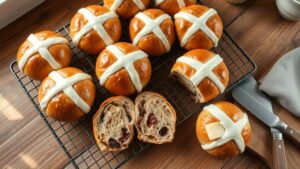
This is the ambitious one. The one that takes hours. The one where yeast is alive under your hands and you can feel the magic happen. (Full recipe with dough-shaping photos and freezer instructions here.)
The Setup: This requires actual advance planning. We usually start these on Easter morning, but with the kiddos, factor in extra time.
What You Make:
– 1 cup whole milk, warmed
– 2 1/4 teaspoons instant yeast
– 4 tablespoons honey
– 4 tablespoons butter
– 1 teaspoon salt
– 1 large egg
– 3 1/2 cups bread flour (approximately)
– Extra butter and honey for brushing
By Age:
– Mason: Pours the warm milk (with help to not splash). Sprinkles the yeast (he loves this—I tell him we’re “waking up the magic”). Stirs the dough once it comes together (very short stint, dough is heavy). Watches it rise and announces when it’s doubled.
– Clara: Mixes the honey, butter, and salt together. Cracks the egg. Combines wet and dry ingredients. Loves the transformation from shaggy dough to smooth dough through kneading.
– Wyatt: Actually kneads the dough. This is work—it takes 8-10 minutes of real kneading—and his arms get tired and he gets why we don’t do this all the time. He learns that dough should feel like a baby’s skin, smooth and slightly tacky. He shapes the rolls after the first rise. He manages the second rise and the baking.
The Teaching: Yeast is alive. Science happens in your kitchen. Time matters. Work has payoff. You can’t rush good things.
The Chaos: It will take longer than you think. Someone will forget about the rising dough for an extra 20 minutes and it’ll be more puffed than planned (still delicious). Wyatt’s rolls will be different sizes (some big, some small) and that’s fine. When they come out of the oven and you brush them with honey butter while they’re still warm, everyone will forget they took forever.
Why It Works: There’s real cooking happening. Heat management. Time management. Seeing the actual transformation. And at the end, warm, golden, honey-buttered rolls. The payoff is immediate and warm and real.
The Full Easter Picture
If you’re just getting started on your Easter planning, read Easter Without the Stress: Make-Ahead Recipes & Timeline You Can Actually Follow first — it gives you the three-week roadmap so you know when to do all this cooking. And if you’re setting the table, check out Easter Table Setting Ideas That Work With Real Families for DIY placecard designs and color stories that make the whole meal feel intentional. How We Celebrate Easter: A Real Midwest Family’s Morning Traditions shows how all these pieces come together in a real family’s kitchen — from before dawn through dinner.
Managing the Chaos: The Part No One Talks About
Here’s the truth: cooking with kids is slower and messier and more complicated than cooking alone.
This is not a reason to not do it. This is the point.
If you approach it expecting efficiency, you’ll be frustrated. If you approach it expecting that this is a teaching moment and sometimes teaching is messy, you’ll be fine.
Accept the pace. When you’re cooking with a seven-year-old, everything takes longer. Mason takes two minutes to measure one ingredient carefully. That’s okay. We’re not on a clock. I’ve learned to build in buffer time—if I want rolls for dinner, I start them early enough that the extra time doesn’t matter.
Assign one thing per kid. Don’t have everyone measuring, everyone mixing, everyone tasting. Assign Mason the stirring task. Assign Clara the decorating task. Assign Wyatt the heat-management task. When everyone has a clear role, there’s less chaos and more learning.
Use mistakes as teaching. If Clara oversalts something, we don’t pretend it didn’t happen. We taste it, acknowledge it, and ask: “What do we do now? Can we fix it? Do we start over?” Sometimes we can balance it. Sometimes we start over. Both are lessons.
Cleanup is part of the lesson. I know, I know. But kids learn that using something means taking care of the space after. It teaches responsibility. And honestly, having them help clean up is faster than fighting about it later.
Let the imperfection be the point. The pancake that’s shaped like Wisconsin. The egg that the yolk got stuck to. The roll that’s half the size of the others. These are the ones the kids remember. These are the ones that prove they made it.
Cooking Together as Easter Teaching
Easter is about new life, renewal, resurrection. And in our kitchen, that’s exactly what we’re doing. We’re taking raw ingredients—flour, eggs, butter—and transforming them into nourishment. Into gathered moments. Into tradition.
Teaching a kid to cook is teaching them that they can make things that matter. That their hands are capable. That feeding people is an act of love. That working with others, even when it’s messy, builds something real.
When I teach my kids to cook on Easter, I’m teaching them to nourish. To care. To show up. Those aren’t just kitchen skills. Those are life skills. Those are the hands that will, someday, teach their own kids. Those are the traditions that stay alive.
And yes, there will be flour on the dog. But hands that know what to do with butter and eggs and flour—those hands know how to care for people.
Closing: Your Kitchen Will Be a Disaster. Your Kids Will Be Proud.
Easter morning, the aftermath of our cooking project: flour everywhere, measuring cups abandoned, a spatula on the floor, Duke smelling like snack mix, the counter a landscape of small disasters. And in the middle of it, three kids eating pancakes they made, deviled eggs they decorated, rolls they shaped. Sticky, proud, real. Something warm, still steaming on their plates. The kitchen is loud and chaotic and absolutely just right—not perfect, but exactly what matters.
That’s the point. Not the perfection. Not the magazine-perfect Easter table (though we’re building toward that too). The point is kids who know that they can make something, that they can feed people they love, that their hands are capable.
That’s what stays. That’s what becomes tradition. That’s what—when they’re grown and have their own kids—becomes the reason they teach their kids to cook on Easter morning.
Start small. Pick one recipe. Let the chaos happen. Take a picture of the flour-dusted faces more than the finished food. That’s what matters.
This Easter, your kitchen will be full and warm and absolutely messy. Your kids will be proud. And the food will taste like love, which is the only recipe that really matters.
Ready to Teach Your Kids? Grab the Free Printable Guide
This is a lot to hold in your head while also managing three kids and a kitchen with flour in the cracks. But you’ve got this.
I’ve created a FREE Printable Recipe Cards for Cooking with Kids guide that includes:
– All four recipes (Bunny Snack Mix, Carrot Cake Pancakes, Deviled Eggs, Honey Butter Rolls) — cards you can print and prop up at your station
– Age-by-age task breakdowns you can print and post on the fridge (so kids know exactly what their job is)
– “What to teach at each step” notes for you — the why behind each task, so you’re not just giving instructions but building understanding
– A chaos-management checklist — permission slips for all the things that will happen
– Simple timing guide so you know when to start (no surprises, no scrambling)
Enter your email below to get immediate access to the PDF. It’s sized to print and perfect to reference while cooking — no fancy formatting, just practical pages that won’t tear when your hands are sticky.
[GET THE FREE PRINTABLE RECIPE CARDS] ← Email signup required. We’ll send you the guide + occasional kitchen wisdom straight to your inbox.
Your kitchen will be full of flour and chaos and the most beautiful kind of pride when your kids sit down to eat something they made with their own hands. That’s the moment that stays. That’s the memory they’ll carry forward. That’s why we do this.
You’ve got this. Your kids are going to remember this Easter morning for the rest of their lives.
Looking to add to your Easter planning? Read Easter Without the Stress for the make-ahead timeline so you know when to do all this cooking. And for setting the table, check out How We Celebrate Easter and Easter Table Setting Ideas for DIY placecard ideas.